Some animals repair organ injury without scarring.
AnimateIQ reads their biology to find the repair switches humans have but leave inactive. We build peptides to turn them on.MBb32, our lead peptide, reduces scarring in lung, liver, heart and skin · Preclinical · A member of UC Berkeley’s Bakar Labs
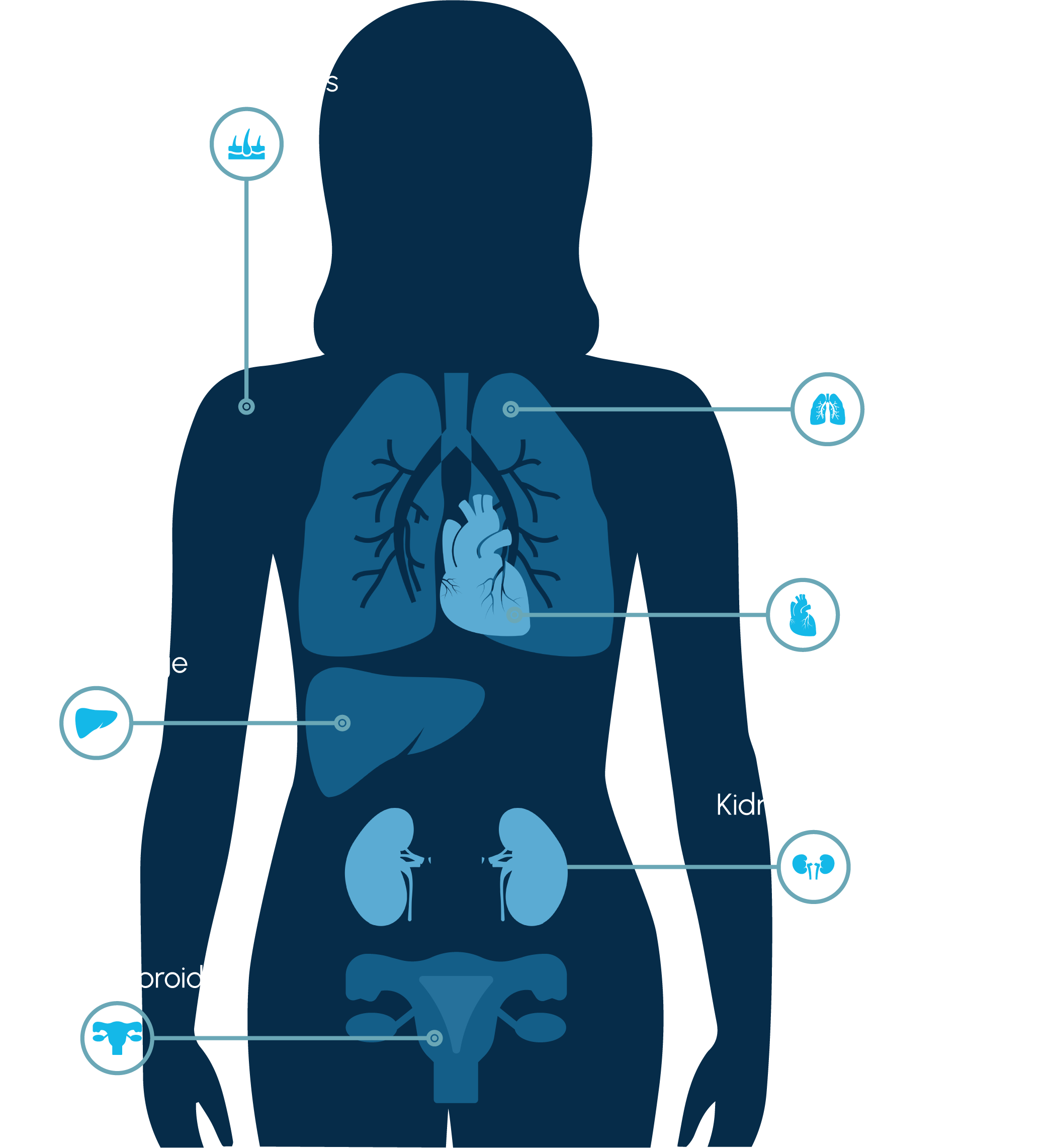
The biggest drugs of the decade came from one idea: find the switch that controls a whole physiology, and build a peptide for it. Novo and Lilly did it for metabolism. Animate is doing it for repair. AnimateIQ applies AI to the multi-omic data of super-regenerators — animals that heal without scarring — and to human organ and disease data, to find the repair switches that sit inactive in humans. We design peptides to turn them on. MBb32, a peptide acting on the first switch, reduces inflammation and scarring in lung, liver, heart and skin. The first GLP-1 drug was a Gila monster peptide. MBb32 is a humanized axolotl’s.
Six in vivo studies, six positive; effect sizes comparable to approved drugs; immune compartment intact. First indication: checkpoint-inhibitor pneumonitis — orphan-sized, no targeted therapy. FDA orphan designation requested; in review.
Humans carry the repair switches. Super-regenerators use them. AnimateIQ reads multi-omic data from both to find the switches, and designs peptides to turn them on. The finished state of successful repair is not in human disease data; it is in the species that complete it — and in our corpus. In silico design to first human-cell read in two weeks.
Partners bring a disease of failed repair. AnimateIQ delivers the targets — and, if desired, the molecules.

One molecule, six indications: owned programs in lung, partner-ready programs in liver, heart and skin. Each in vivo result is versus its own disease control.
 Checkpoint-inhibitor pneumonitis — lead · lung ADC-associated pneumonitis · lung Fibrosing ILD · IPF · lung
 MASH · liver
 Post-infarction remodelling · heart
 Dermal scarring · wound healing · skin

Our leadership blends deep expertise in regenerative biology,
therapeutic development, and machine learning.


